
New Charges Brought Against Artsakh Leaders
As the sham trials of Artsakh leaders continue in two separate military courts in Baku, a legal expert said that through these trials, Azerbaijan wants to prosecute, and thus delegitimize Artsakh’s right to self-determination.
“These individuals are symbolic and subject to personal vendettas, but Azerbaijan’s ultimate goal is to judge and condemn Artsakh’s right to self-determination,” Siranush Sahakyan, a legal expert who represents Armenian prisoners of war in international courts, told Azatutyun.am, the Armenian service of Radio Free Europe/Radio Liberty.
She said that by engaging Armenia in these cases, Azerbaijan wants to close the issue of the right of self-determination of the people of Artsakh within international courts. With rulings against the Artsakh leaders, it will try to present Armenia as an aggressor that “occupied Artsakh.”
Prosecutors in the closed-door trial levied more charges against Artsakh leaders, who were captured and jailed following Azerbaijan’s attack on Artsakh in September 2023, which forced the displacement of Artsakh’s entire Armenian population.
The new charges include allegations that the leadership in Artsakh “illegally fired and deported” teachers and students from the Stepanakert Pedagogical Institute. Another allegation levied against the Artsakh leaders was that the Artsakh war had caused damages worth 100 billion manats, or roughly $58 billion.
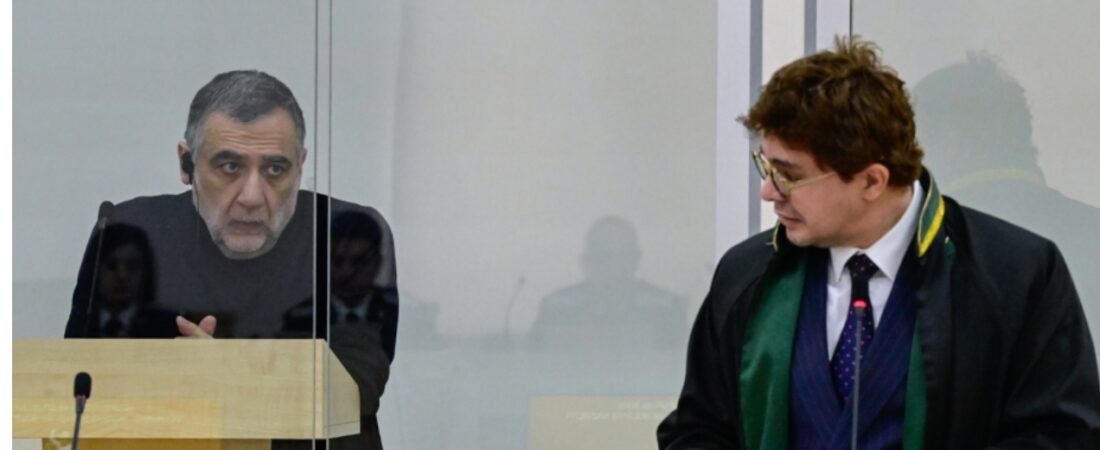
Over in another courtroom where Artsakh’s former State Minister Ruben Vardanyan is being tried separately, prosecutors continued to read out the more than 45 charges against the defendant.
Vardanyan told the court last week that he did not want to be represented by the court-appointed defense attorney, citing the fact that the lawyer had not sufficiently represented his interests. Instead, Vardanyan entered the courtroom with a private attorney, Avraam Berman, who is licensed to practice in Azerbaijan.
During the court session on Monday, Vardanyan’s attorney asked the court to allow a consultation with his client, which the judge granted. Following the meeting, the team asked the court to have the judges recuse themselves from the “trial”.
Prosecutors Vusal Aliyev and Fouad Musa, who support the state’s accusations, noted that a similar motion had been discussed at a previous court session and a decision was made to reject the motion, according to reports by the Azerbaijan’s pro-government press.
On Friday, prosecutors charged Vardanyan with allegedly plotting to assassinate high-ranking Azerbaijani officials, calling the so-called plan “Operation Nemesis, 2.0.” The Azerbaijani press did not report whether any evidence of such a plot was presented in court.
Ruben Vardanyan, a businessman and philanthropist, moved to Artsakh two years after the 44-day war and served as state minister for just three months. Despite having no involvement in military operations in Artsakh or Armenia, he faces charges of war crimes.
As with other Armenian prisoners, Vardanyan has also been accused of crimes against Azerbaijan, including charges related to the September 2022 border clashes.
However, it is well documented that Azerbaijan launched an attack on Armenia in September 2022, seizing sovereign Armenian territories. The two-day clashes resulted in the deaths of more than 200 Armenian soldiers and civilians.
Sahakyan, the legal expert, told Azatutyun.am that in the trial of Artsakh leaders, the prosecutors are going through the motions of a trial “but not justice.
Sahakyan was also skeptical about how far private attorneys would go to advance the case for their client. She believes that if an attorney attempts bold tactics, they will be deprived of the right to practice law due to the repressive state of Azerbaijan’s justice system.
“There have been cases where criminal charges were initiated,” against attorneys, Sahakyan said.
Prime Minister Nikol Pashinyan recently stated that Armenian prisoners in Baku might be coerced into making statements that could later be used against Armenia. He described the trials as a theatrical performance.
According to Sahakyan, the Armenian government is avoiding active steps, even on humanitarian issues, and is failing to counter Azerbaijan’s long-term objectives in international political and diplomatic arenas.
Ruben Vardanyan’s trial will continue on February 25, while the trials of former Artsakh leaders are scheduled for February 20.
Sources: ASBAREZ & PanArmenian.net