
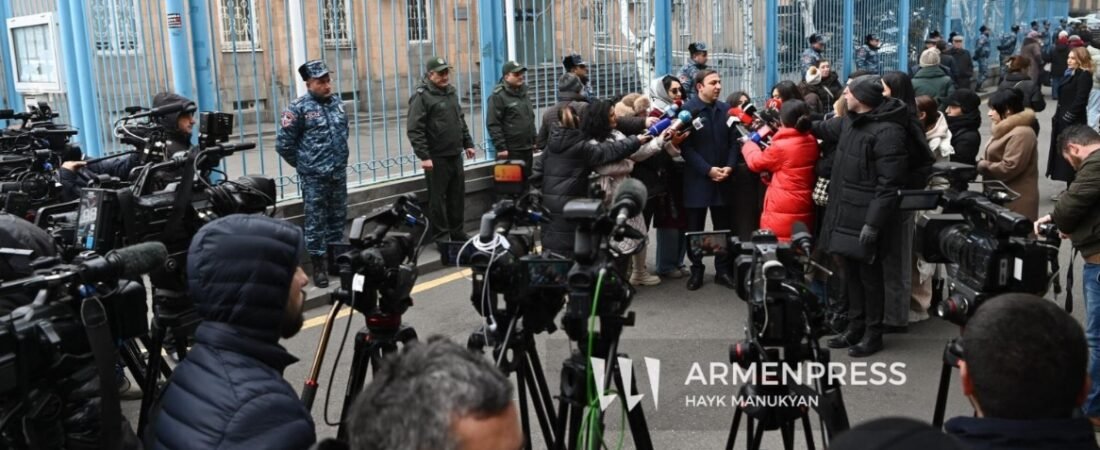
YEREVAN (Combined source) 17 January – Armenia’s government pointedly declined to react on Friday to the start of the trials in Azerbaijan of eight former leaders of the Nagorno-Karabakh (Artsakh) Republic and eight other Karabakh Armenian prisoners which human rights activists in Yerevan condemned as a travesty of justice.
All 16 defendants were captured by Azerbaijan during and after its September 2023 military offensive that forced Karabakh’s entire population to flee to Armenia and restored Azerbaijani control over the region.
In contrast with an outpouring of support for the captives voiced by prominent public figures in Armenia and its worldwide Diaspora, neither Prime Minister Nikol Pashinyan’s office nor the Armenian Foreign Minister commented on the trials as of Friday evening. Lawmakers representing Pashinyan’s Civil Contract party did not make any statements either.
The Armenian government insisted earlier that it has been trying hard to have all Armenians remaining in Azerbaijani captivity freed. Armenian opposition groups and some Karabakh leaders exiled in Armenia dismissed those assurances.
Two of those leaders led on Friday a demonstration in Yerevan in support of the Karabakh Armenians standing trial in Baku. Its several hundred participants rallied outside the UN office in the Armenian capital before marching to the Foreign Ministry building to demand stronger international pressure on Azerbaijani President Ilham Aliyev’s regime.
Participants of the demonstration the UN Armenia office submitted a petition to the UN office calling for practical steps to release the prisoners, preserve the Armenian heritage in Nagorno-Karabakh (Artsakh), ensure the right to return of the Armenian population of Nagorno-Karabakh and implement mechanisms to determine the fate of the missing persons.
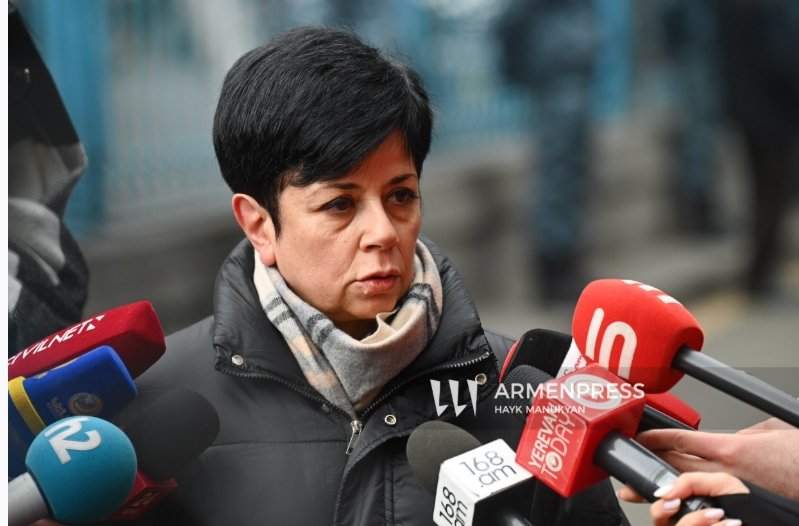
Narine Aghabalyan, a former minister of NKR and the Artsakh program leader of Aurora Humanitarian Initiative, said it is important to once again raise their voice about the crime against justice and draw the world’s attention to the Azerbaijani government’s criminal conduct. The judicial process in Azerbaijan against the Armenians is widely seen as a show trial.
“Ruben Vardanyan’s latest statement highlights the alarming situation and the embarrassing condition of the justice system in Azerbaijan. Vardanyan’s statement was a call on all of us, both the Armenian society and the international community, to take appropriate steps,” she said.
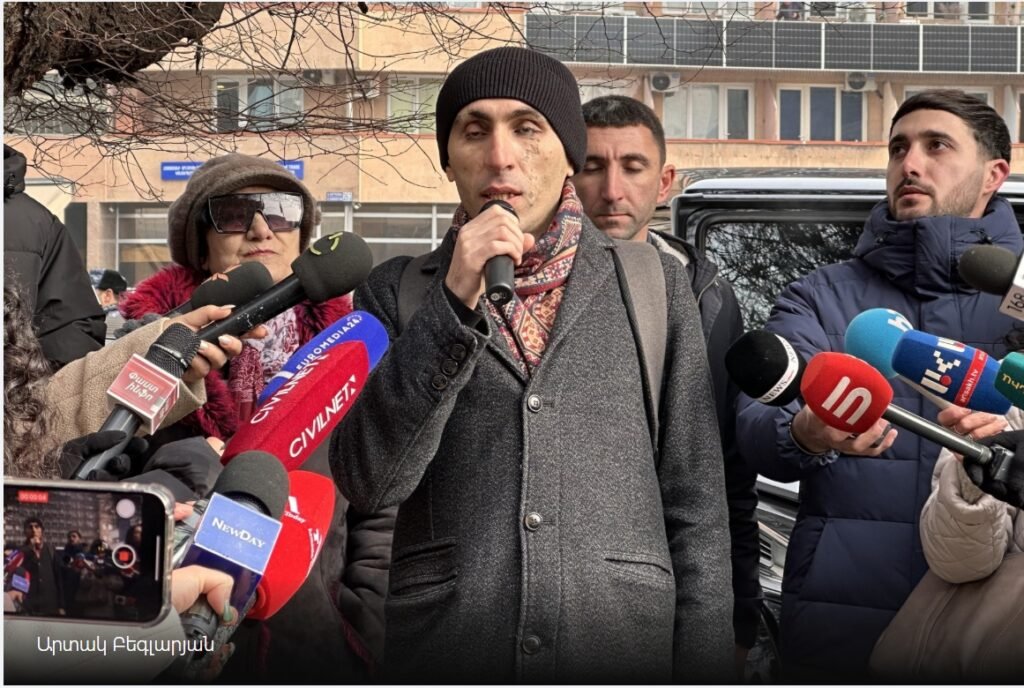
“The pressure will increase if Armenia’s political authorities have the political will,” said Artak Beglaryan, a former Karabakh premier and human rights ombudsman. “Because international structures and various governments are very straightforward in saying, ‘If this issue is not on Armenia’s agenda, what do you want from us?’”
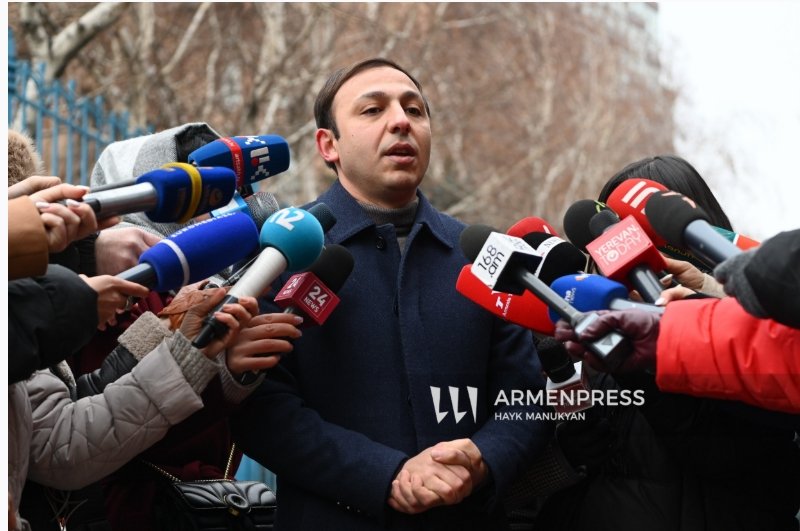
The current Karabakh ombudsman, Gegham Stepanyan, also rebuked Pashinyan’s government: “The Armenian authorities state that they constantly raise this issue in the negotiation process, but as I have said before, these efforts are not visible, to say the least.”
Stepanyan stressed that “We should achieve the release and repatriation of our compatriots by generating as much international pressure as possible. All these actions, of course, cause skepticism among many people that we cannot record any results, but I want to say the following: it is much better to continue the struggle than to do nothing,” he said.
“We understand that we are dealing with a despotic and hostile state, which we cannot convince or force at the moment. This does not mean that we should turn to inaction and do nothing, on the contrary, we should. As much as possible, the human rights community, the Republic of Armenia authorities in governmental circles, international organizations, and NGOs should do their job,” he said.
“The international community will not do anything until the Republic of Armenia authorities and the diaspora present clear demands to the international structures. This issue should be made an issue of the agenda in the international structures and only then is it possible to increase the international pressure on Azerbaijan,” concluded Stepanyan.
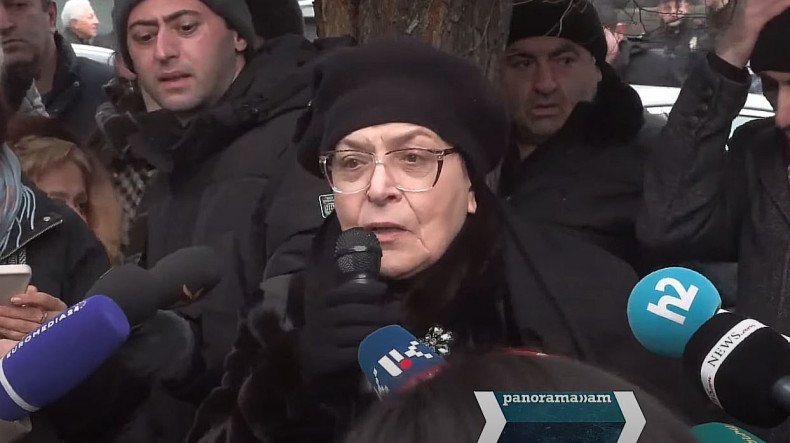
Larisa Alaverdyan, the first ombudswoman of the Republic of Armenia, in front of the Armenian representation of the UN office, asserted that according to the UN charter, the UN member states are obliged to carry out certain actions that are systematically ignored; Azerbaijan keeps Armenian prisoners are hostage for political trade, and all this is done under the silence of the UN encouraging Azerbaijan.
Alaverdyan noted that political positions can be different. But humanitarian law, international humanitarian law obliges everyone to stop and end the brazen actions by which Azerbaijan violates the norms of international humanitarian law and opposes itself.
“We are obliged always to raise our voices, to warn about it with constant actions. What the [Armenian] government does not do, the society should do. We must fill the gap with you which is criminally not being carried out by the people who are supposed to do it. Shame on you, [you have a] shameful scar on your forehead,” said Alaverdyan.
‘Miasin’ movement submits petition to Armenia government
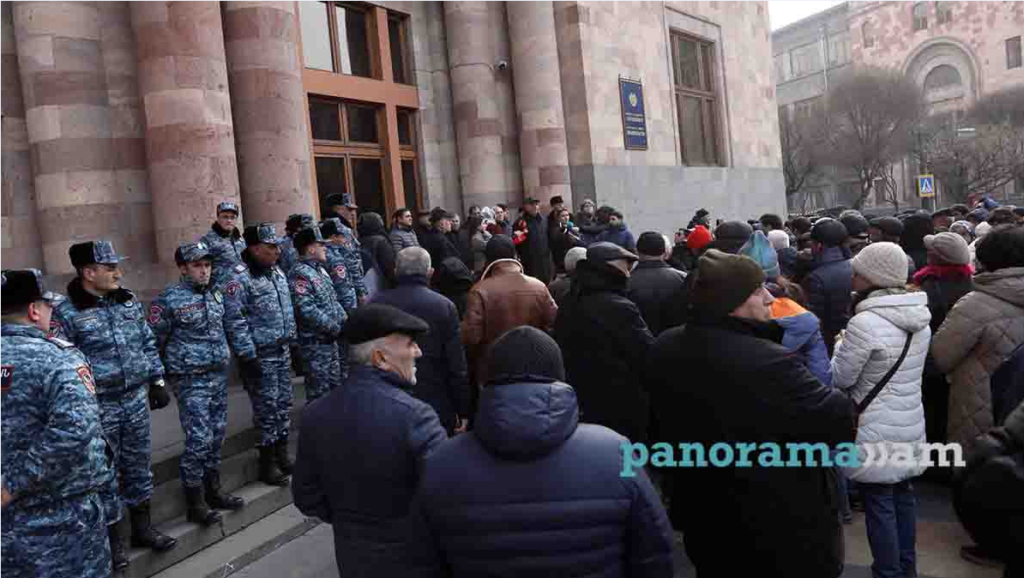
The “Miasin (Together)” sociopolitical movement and various political forces demand Armenian Prime Minister Nikol Pashinyan to petition the co-chair countries of the OSCE Minsk Group with a demand to annul the Armenian military and political captives’ “trial” starting in Baku, the capital of Azerbaijan, and to release them.