

BAKU, Jan 17 (Combined sources) – The trials —in de facto closed-door proceedings— of 16 Armenian hostages, including former leaders of the Nagorno-Karabakh (Artsakh) Republic, have begun at the Baku Military Court after the defendants spent more than a year in pretrial detention.
Fifteen defendants —including former leaders and other civilian and military figures of Artsakh— are being tried together, while Ruben Vardanyan —a former Russian businessman of Armenian descent, who for several months in 2022-2023 was the State (Prime) Minister of the Artsakh Republic— is being tried separately. The first trial commenced at 11:00 A.M., while Vardanyan’s began at 3:00 P.M.
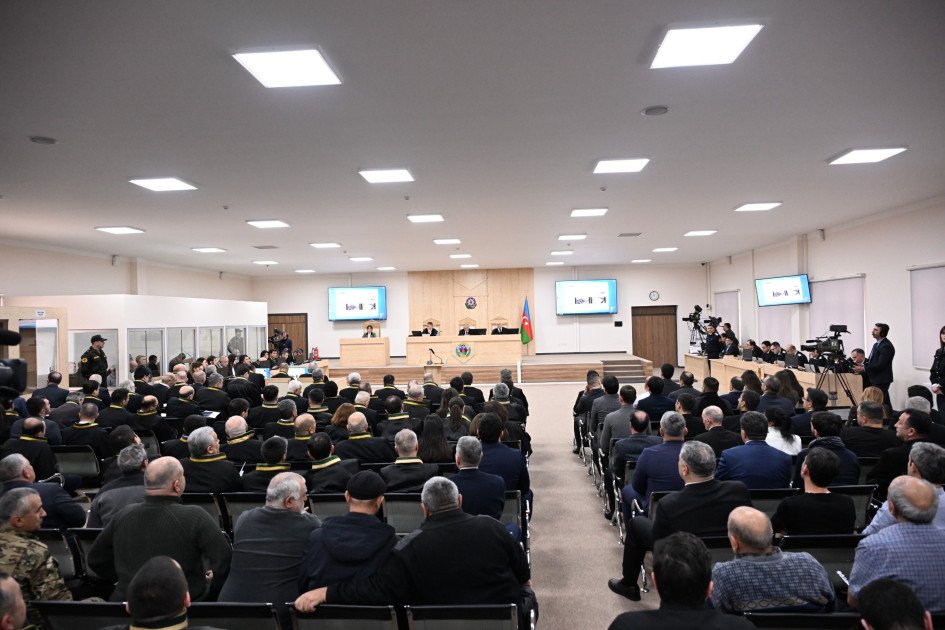
On trial are former presidents of Artsakh, Arayik Harutyunyan, Arkadi Ghukasyan, Bako Sahakyan, former Foreign Minister David Babayan, and parliamentary speaker David Ishkhanyan.
The defendants are being tried on charges of terrorism, crimes against humanity, including genocide and war crimes, and crimes against the state of Azerbaijan, some of which can carry terms of life imprisonment, according to Azerbaijani prosecutors. The alleged crimes —2548 episodes— were committed from October 1987 to April 22, 2024. The prosecutors announced that the criminal cases against the detainees involved more than 531,000 individuals and their representatives.
The Prosecutor-General of Azerbaijan has appointed a team of six prosecutors to prosecute the cases.
Three judges from the Baku Military Court —presided over by Judge Zeynal Agayev— conducted the hearings, which are being held in a purpose-built courtroom. Though the authorities announced the trial was open, only state-controlled media were permitted to attend the January 17 hearing. Reuters was denied access to the courtroom.
‘I Reiterate My Complete Innocence’
Vardanyan is specifically accused of financing terrorism, forced deportations, torture, and illegal border crossings, as well as other crimes — charges which he and his family deny.
“I reiterate my complete innocence and the innocence of my compatriots and demand the immediate cessation of this politicized case against us, ” he said in a statement issued on the eve of the trial.
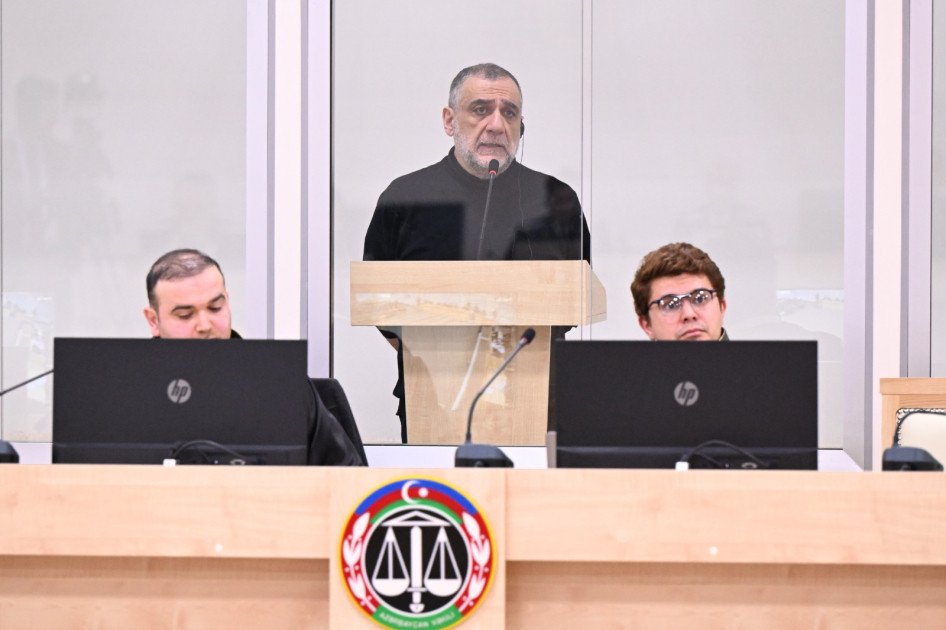
In his statement, Vardanyan said he had not been given enough time to review the indictment against him, and the 422 volumes of evidence had been presented in Azeri, a language he does not speak. He has also asked for an open trial and the combination of his case with that of 15 other defendants.
Prosecutors said Vardanyan had received full access to the case materials and had been granted rights to a legal defense, access to his preferred language, and other procedural rights during the investigation. The court granted a 10-day continuance to Vardanyan.
Jared Genser, Vardanyan’s international counsel, said the legal process was “extraordinarily opaque” and called the case “a political show trial”.
Vardanyan’s lawyers have said he was mistreated in custody. Azerbaijan’s prosecutor general has said Vardanyan’s rights were being respected, and he, and all of the others, had received visits from the International Committee of the Red Cross.
The court denied Vardanyan’s request to merge his case with the others’.
At the first hearing of the 15 on January 17, the court assigned the defendants state-appointed lawyers and translators fluent in Azerbaijani and Armenian.
The trials also feature testimonies from hundreds of alleged victims, including relatives of those who died in the Nagorno-Karabakh fighting in the early 1990s and 2000s.
The trial of the 15 will resume on January 21, and the proceedings of Vardanyan will resume on January 27.
‘Nuremberg Process’
The Azerbaijani state-controlled media reports that this process will primarily serve to establish the state responsibility of Armenia as an invading and aggressive country and other illegal acts, hence their assertion that this is the “Nuremberg Process.”
Peace talks between Armenia and Azerbaijan have effectively stalled more than a year after Baku retook Nagorno-Karabakh in a lightning offensive, prompting its entire ethnic Armenian population of over 100,000 to flee to Armenia. All 16 defendants were captured by Azerbaijan during and after its September 2023 military offensive.
Yerevan has said the war and ensuing mass exodus amounts to ethnic cleansing. Baku rejects that accusation boasting “Let them not forget about the anti-terror operation [of September 2023 in Karabakh]. We achieved what we wanted without fearing anyone, without reckoning with anyone.”
Azerbaijani president Aliyev has reiterated that Armenia must not only change its constitution but also ensure the return of Azerbaijanis who lived there until the late 1980s, stop buying weapons and agree to disband the OSCE Minsk Group tasked to resolve the Nagorno-Karabakh conflict. He has confirmed that two other demands are the remaining sticking points in Armenia-Azerbaijan negotiations on a bilateral peace treaty. Baku wants to add clauses to the draft treaty requiring the two sides to drop international lawsuits filed against each other and banning the presence of third-party monitors or troops on the Armenia-Azerbaijan border.