
By Rouzanna Stepanyan
Azatutyun.am
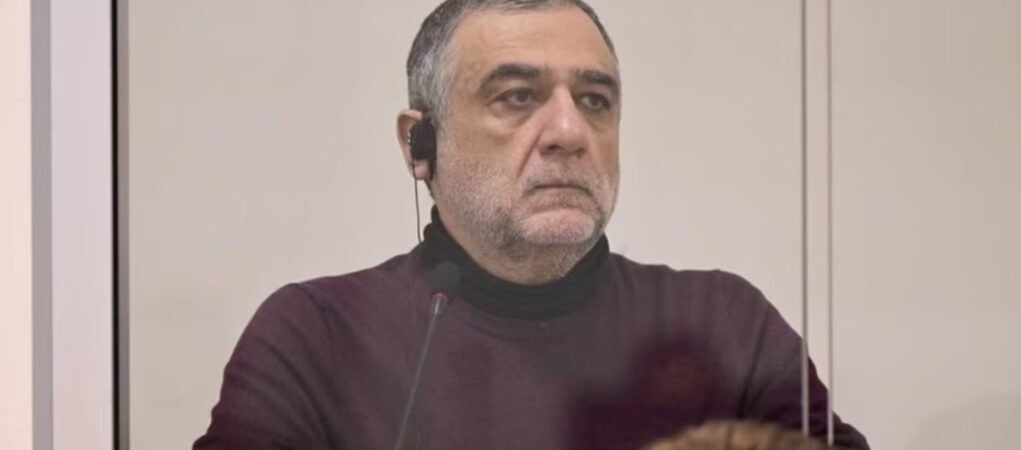
Human rights lawyer Siranush Sahakyan, who represents Ruben Vardanyan—the former State Minister of Artsakh and philanthropist sentenced to 20 years’ imprisonment in Azerbaijan—will apply to the European Court of Human Rights (ECtHR).
“We are in the preparatory phase; the case will be filed in a few weeks,” Siranush Sahakian told RFE/RL’s Armenian Service.
Vardanyan, who held the second-highest post in Nagorno-Karabakh’s leadership from November 2022 to February 2023, was arrested at an Azerbaijani checkpoint in the Lachin corridor in September 2023 as he fled the region along with its practically entire ethnic Armenian population. Seven other former Karabakh Armenian leaders were also arrested during the exodus that followed an Azerbaijani military offensive.
Five of them were sentenced to life imprisonment, while two others, as well as Vardanyan, received 20-year jail sentences in February at the end of yearlong trials denounced by Amnesty International as a “travesty.” They all denied a long list of accusations brought against them.
The international law specialist stated that they have finally succeeded in obtaining Vardanyan’s verdict, which was necessary to initiate proceedings before the ECtHR.
“We will demonstrate that the charges are politically motivated, that Mr. Vardanyan has never committed any individual criminal act, that the collective right to self-determination has been unlawfully characterized as terrorism or other related offenses, whereas no punishment can exist without an act explicitly prescribed by law,” Sahakyan said.
Baku continues to refuse to provide the verdicts of the 15 Armenian prisoners held in Azerbaijani prisons
Sahakyan said that Azerbaijani authorities have made the appeal to the ECHR possible by finally providing Vardanyan’s legal team with the full text of the guilty verdict against him. In her words, they remain reluctant to do so with regard to the seven other former Karabakh leaders as well as either of the eight other Armenians remaining in Azerbaijani captivity.
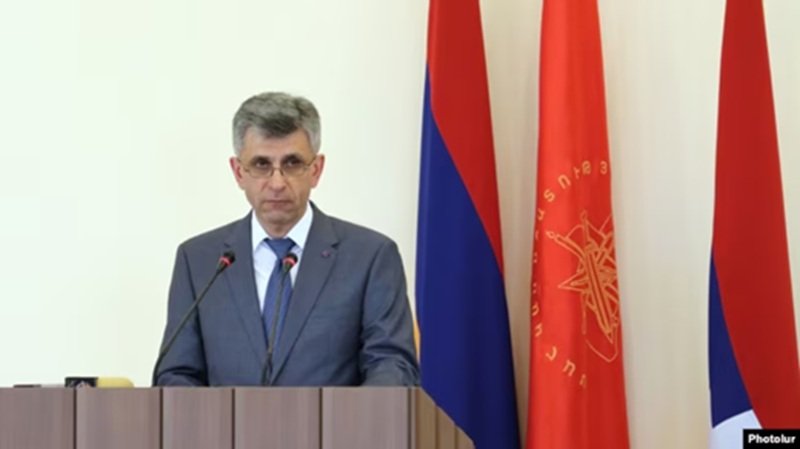
David Ishkhanyan, the former Speaker of the National Assembly of Artsakh, who is one of those sentenced to life imprisonment in Azerbaijan, sent an audio message from prison yesterday, informing the public that the 15 Armenian prisoners—including the former military and political leadership of Artsakh—have appealed their verdicts before the Court of Appeal. According to Ishkhanyan, the appeal is merely procedural; they have no expectations of Azerbaijani justice and are taking this step solely to pave the way for proceedings before international courts.
Unlike them, Vardanyan decided not to appeal to an Azerbaijani court against his sentence, saying that he does not want to legitimize the “politically motivated and unlawful” case.
Ishkhanyan had also told the Azerbaijani court that the entire case had been fabricated to punish the Armenian people. To demonstrate how contrived the case is, the former Speaker of the National Assembly of Artsakh noted that an individual born in 1993 had even been accused of participating in military operations that took place in 1991–1992. The court nevertheless accepted those allegations as proven.
“This is a politically ordered and political trial. These proceedings have nothing to do with criminal offenses; they are based on ethnic identity and national hatred, and that is the atmosphere in which the trial has been conducted. Naturally, I was repeatedly interrupted by the unjustified interventions of the prosecutors and the judge, but we completed everything, and I explained, article by article, how the verdict was reached through slander, without evidence or concrete facts. Provisions of the Azerbaijani Criminal Code were selected and crudely attached to us. This is not merely a fabricated case—it is a patchwork,” Ishkhanyan stated.
Following the closure of the International Committee of the Red Cross office in Baku, the Armenian citizens have been left in complete isolation. For the past eight months, they have also been deprived of the opportunity to review their own verdicts. In other words, the Azerbaijani justice system refuses to disclose the specific acts attributed to the Armenian citizens or the evidence on which the convictions are based.

Human rights lawyer Siranush Sahakyan, who has been actively representing Armenian prisoners before international institutions, stated that by withholding the verdicts, Baku is attempting to obstruct the submission of international complaints, since possession of the verdicts is required to file an application with the ECtHR.
If Azerbaijan continues, in violation of the law, to withhold the verdicts, Sahakyan said they will obtain them through the European Court of Human Rights. The ECtHR has issued an interim measure requiring the Azerbaijani authorities to submit the verdicts concerning the 15 Armenian citizens to the European Court by 31 August.
“If they fail to provide them even to the European Court, we will have allegations of a new category of human rights violations. I believe the Azerbaijani authorities will not take that path and will, at the very least, provide the verdicts to the Court,” Siranush Sahakyan said.
Prime Minister Nikol Pashinyan and other Armenian officials insist that Yerevan has been doing its best to try to secure the release of the Armenian prisoners. Their critics dismiss these assurances. Vardanyan has likewise repeatedly accused the Armenian government of being indifferent to the prisoners’ fate. He has repeatedly lambasted Pashinyan in statements from an Azerbaijani prison released through his family.
Davit Ishkhanyian has gone further, saying that Armenia’s leadership does not want Baku to free them. Ishkhanyian repeated his claims in another audio message that his family publicized on Thursday.
“They [Azerbaijani officials] treat international bodies and the court with scorn and contempt,” he said. “The worst thing is that they simply throw such thoughts in our faces: ‘If your authorities are not doing anything and are not interested in your return, what do you want from international bodies or courts?’”
Last month, seeking to visit the 19 Armenian prisoners who have been held in Azerbaijani prisons for years, Veronika Zonabend, the wife of philanthropist Ruben Vardanyan, announced a humanitarian initiative aimed at organizing a visit to Baku by an international delegation of women.
Noting that the Armenian citizens have long been deprived of regular, independent humanitarian contact with their families, Zonabend appealed to the Azerbaijani Ombudsman, requesting that the delegation’s visit to Baku be facilitated, that meetings be arranged with the Armenian prisoners held at the Umbaki penitentiary complex, and that they be allowed to receive parcels, photographs, and letters prepared by their families.
“For the prisoners, this is a reminder that they have not been forgotten,” Vardanyan’s wife stated. She also plans to travel to Baku as part of the delegation.
Incidentally, human rights lawyer Siranush Sahakyan said that, for security reasons, the delegation will not include women of Armenian ethnicity. Instead, the initiative will involve prominent foreign women human rights defenders.
Sahakyan stated that many human rights advocates have already expressed their willingness to participate in the humanitarian initiative and travel to Baku. Their names will be made public once the Azerbaijani Ombudsman responds to the initiative and if the authorities in Baku agree to receive the international delegation.