
By Ruzanna Stepanyan | Azatutyun.am
The son of one of the 19 Armenian prisoners held in Baku, Madat Babayan, says he is ready to travel to Baku to see his father, whom he has not seen for three years.
“Whoever wants can organize it — we just want to go and see him,” he said.
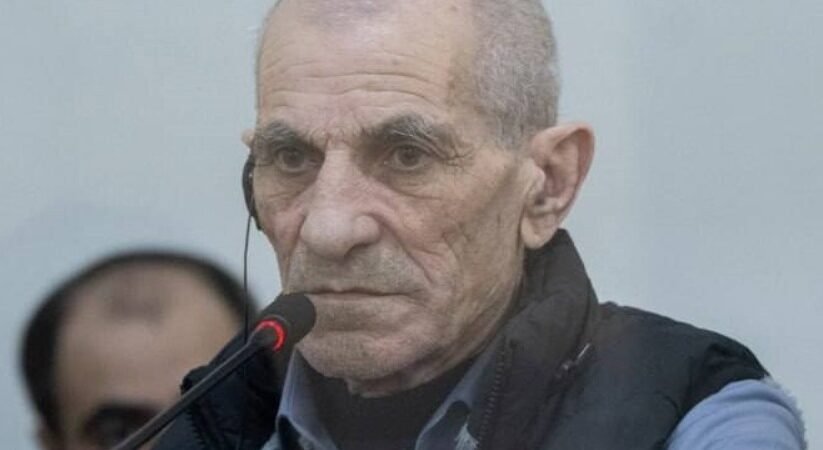
Babayan, a resident of the village of Getavan in Martakert, failed to leave the village during Azerbaijan’s military offensive against Artsakh in September 2023 and was later captured by Azerbaijani forces. Baku accused the 74-year-old Armenian man of involvement in the so-called “Khojaly genocide” and sentenced him to 20 years in prison.
“There is no trust in them [Azerbaijan]. If it happens through the Red Cross, it’s possible to go. If it is safe, then there is no issue,” Babayan’s son said.
Armen speaks with his father by telephone once a week from the prison in Baku. He has no opportunity to obtain information from any independent body regarding his father’s health condition or detention conditions. Since the closure of the Red Cross office last September, Armenian prisoners in Azerbaijan have found themselves in complete isolation.
“The last time we spoke was a week ago. He has a tumor in his throat, and that troubles him the most. He says there is something in his throat that constantly bothers him — he cannot breathe properly or eat normally,” Babayan’s son recounted.
The previous day, former Artsakh State Minister Ruben Vardanyan had appealed from a prison in Baku to the Armenian authorities with a request to allow relatives to visit the prisoners. He questioned why Armenian officials negotiate with Azerbaijan on economic matters while the issues concerning the lives, health, and rights of Armenian prisoners are absent from Yerevan’s official agenda.
Vardanyan therefore requested that the possibility be considered for his wife, Veronika Zonabend, as well as the relatives of other prisoners, to visit Baku.
Are Armenia’s state institutions prepared to organize visits to Azerbaijan for the relatives of the 19 Armenians being held in Baku prisons? Neither Prime Minister Nikol Pashinyan nor the Foreign Ministry had responded to Vardanyan’s request as of yet.
Meanwhile, human rights advocates are convinced that Armenian state institutions are capable of organizing such visits, just as they have done in the case of non-governmental organizations, which have already conducted reciprocal visits twice.
According to international law specialist Anna Melikyan, since the process of securing the prisoners’ immediate release is dragging on, steps must now be taken to protect the rights of Armenian citizens and their relatives.
Considering that there is currently no international organization in Azerbaijan able to visit the Armenian prisoners and assess their detention conditions and health status, the human rights advocate believes Armenia should use all available instruments, including mediation by other countries, to exert influence on Baku and protect the rights of its citizens.
“In the context of consolidating peace, resolving primary humanitarian issues is, in my opinion, far more important before speaking about restoring trade relations,” Anna Melikyan emphasized.
Is the Armenian government taking sufficient steps to secure the prisoners’ return and protect their rights?
The international law specialist stressed that if sufficient steps had been taken, the captured Armenians would already be back in Armenia.
The human rights advocate believes that the Armenian authorities are clearly constrained on this issue in order not to provoke Azerbaijan’s dissatisfaction. Anna Melikyan noted that Armenia’s position has changed sharply since last year and that the authorities no longer clearly raise prisoner-related issues as violations of rights.
According to Melikyan: “Moreover, in speeches — including at the level of the prime minister at the United Nations and the European Parliament — we noticed that when the issue is raised, there seems to be an attempt to soften the problem and neutralize its severity.”
So far, only Human Rights Defender Anahit Manasyan has responded to Ruben Vardanyan’s request from the Baku prison. However, she essentially stated that she does not have a mandate to organize visits or issue assessments regarding Azerbaijani prisons.
“You understand as well that I cannot exercise monitoring powers in another state. Naturally, all those particularities must be taken into account,” Ombudsperson Anahit Manasyan told journalists.
At the same time, the Human Rights Defender believes that the government is not displaying inaction regarding the protection of prisoners’ rights and promised that she would speak out if she observed such a problem.
“If I see inaction or, in general, a failure to exercise their powers, naturally I myself will be the first to speak publicly about it,” Manasyan stated.
Is Human Rights Defender Anahit Manasyan constrained in assessing the Armenian authorities’ actions regarding the protection of prisoners’ rights?
Human rights advocate Anna Melikyan is convinced that the ombudsperson could use her mandate more actively.