
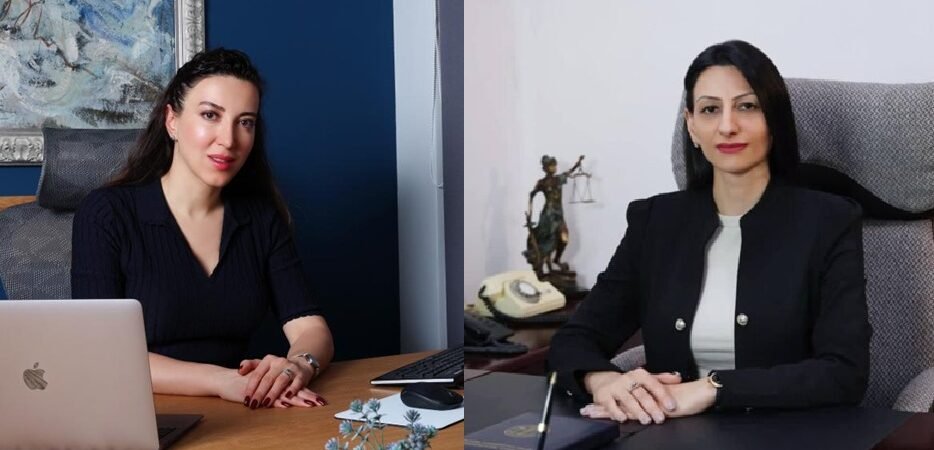
Author: Hayk Gevorgyan
“Hraparak” spoke with human rights lawyer Siranush Sahakyan, the representative of Armenian prisoners of war before the European Court of Human Rights.
— Ruben Vardanyan and Davit Ishkhanyan have sent messages from Baku prison, carrying rather bleak and desperate undertones. Vardanyan’s message makes it clear that the Armenian authorities are doing nothing to secure the repatriation of the prisoners. Vardanyan also appealed for Armenia’s Human Rights Defender to travel to Baku and visit him, though she effectively declined. Is there any information about what is currently happening in Baku with the Armenian prisoners of war?
— There is an issue that has been publicly raised. It has probably not escaped anyone’s attention that meetings have taken place with the Azerbaijani Ombudsperson. We understand that such meetings can occur solely at the initiative of the Ombudsperson. Armenian hostages have, at different times, voiced various concerns and problems, yet Azerbaijani officials do not heed them. During meetings with Azerbaijan’s Ombudsperson, Armenian prisoners raised issues that fall precisely within the Ombudsperson’s mandate. For example, Azerbaijani courts are not providing verdicts. I cannot imagine what work Armenia’s Human Rights Defender could do in this context to ensure that verdicts are handed over.
For instance, there are judicial acts in Armenia that are not provided to the parties concerned, and I do not clearly understand how the Ombudsperson of Belgium or Russia, for example, could solve such a systemic problem. My knowledge and experience show that human rights defenders are primarily intended to protect individuals within their own countries from the actions of their own authorities. At present, the rights of Armenian prisoners of war are being violated in Azerbaijan, so I do not clearly see what Armenia’s Ombudsperson can accomplish there.
Instead of carrying out her own duties, Azerbaijan’s Ombudsperson considers the visit of Armenia’s Ombudsperson to Azerbaijan to be important. For me, as a specialist in this field who documents various Azerbaijani patterns on a daily basis, it is highly interesting to understand what issue Anahit Manasyan could possibly resolve in Azerbaijan. If this is merely a tour, then we will simply see photographs that visually portray “peace,” following the same logic as visits by civil society representatives.
But if the Human Rights Defender truly bears responsibility for the office she holds and the mission she has undertaken, then it is at the very least unclear to me under what guarantees, rules, and procedures she would be capable of documenting the existing problems and raising them internationally. Armenia’s Ombudsperson does not possess such tools; she would merely become an appendage to Azerbaijan’s Ombudsperson, who to this day attempts to convince courts that Armenians are not being tortured and are, moreover, being held in a safe environment.
Under these circumstances, I simply cannot imagine a more dangerous visit than a visit by the Ombudsperson to Azerbaijan.
— In that case, why did Ruben Vardanyan express such a wish?
— Ruben Vardanyan may not be familiar with the legal nuances involved. We must take into account that the expressed wishes of Armenians may be subject to change due to the conditions of detention in Baku prisons. If torture-prevention mechanisms are needed in Azerbaijan, then this must occur within an international framework, because such mechanisms already exist. Unlike Azerbaijan’s Ombudsperson, Armenia’s Human Rights Defender is a member of the European Committee for the Prevention of Torture. What is preventing Azerbaijan’s Ombudsperson from inviting Anahit Manasyan to Baku precisely under the auspices of that committee, so that Armenia’s Human Rights Defender would have an internationally guaranteed set of tools at her disposal?
The Azerbaijani side could pledge that any report prepared within the framework of such a visit would be subject to publication. In the published messages, we should identify issues connected with human rights violations: the failure to provide court verdicts, issues concerning communication with family members, visitation rights, and so forth. Incidentally, regarding visitations, the responsible parties are certain Armenian state bodies, but not the Ombudsperson.
In my opinion, the visit of Armenia’s Human Rights Defender to Azerbaijan has a political component rather than one connected to human rights concerns.
We have also discussed consular visits. Armenia, as a sovereign state, has the right to visit its citizens, as well as to provide consular services, through which a number of human rights-related issues could be documented. Had the visit been mediated, and for that purpose carried out by an employee of an Armenian consulate or an Armenian representative — who could also be an employee of another consulate accredited in Baku — they could have gained access, familiarized themselves with all the issues, and the problems would then have been raised through diplomatic channels.
We are emphasizing the issue that Armenia must develop mechanisms aimed at reducing the vulnerability of Armenian prisoners of war held in Azerbaijan, especially since the Red Cross no longer operates there. As for visits by state bodies, they should be directed toward exposing torture and preventing it.
We must not adapt ourselves to a situation in which Armenians are imprisoned in Baku and our sole concern becomes ensuring visitation in order to ease longing and separation. Rather, we must work toward their immediate release, because they have ended up in Baku prisons unlawfully.
— Several high-ranking European officials recently visited Armenia. For example, the President of France promised to raise the issue of Armenian prisoners of war with Aliyev. In your opinion, was this issue discussed within the framework of the European Political Community Summit held in Yerevan?
— The European Parliament adopted a resolution containing a clear formulation that the Azerbaijani side must immediately release Armenian prisoners of war. Of course, this is an instrument of political pressure which, in practice, has not yet produced results. However, it is very important that political steps are also taken in this context.
The Azerbaijani side reacted very sharply to it, which means that the demand ran counter to Azerbaijan’s state policy. Azerbaijan’s president stated that the Armenian prisoners are “his prisoners,” and that Europeans have no business concerning themselves with them. He attempted to portray the matter as a domestic issue, an internal affair into which international organizations should not interfere.
We saw that the Azerbaijani authorities reacted painfully to the adoption of that resolution. The suspension of political relations between the parties also resembles a form of demarche. Nevertheless, the Azerbaijani side will not completely sever its ties, because doing so would not serve its interests; there are also commercial considerations involved.